
Business process automation in the UAE. Stop being human copy-paste.
We hand the repetitive, error-prone jobs to software, use AI where it helps, and keep a person in the loop where it counts. Your team gets its day back.
Last updated: August 2026
The work that should not need a person.
Practical automation wired into the systems you already use.
Invoice and document capture
Supplier bills arrive as PDFs in whatever layout the sender felt like. AI reads them and a draft bill appears in Odoo with supplier, TRN, line items and VAT already filled in, ready for a person to approve.
Payment reconciliation
Settlement files from Network International, N-Genius, Telr, PayTabs or Magnati matched against your invoices automatically, so only the exceptions that need a human reach one.
Order and stock sync
WooCommerce, your ERP and your accounting kept in step, so an order is not re-keyed three times and your stock figure is not wrong by Friday.
Built on n8n, Make or Power Automate
We pick the platform to fit your systems and whoever maintains it afterwards, and can self-host it on your own server when the data should not sit with a third party.
AI where the input varies
OpenAI and Claude models for reading messy documents, sorting requests and drafting replies. Plain rules where the answer has to be exact, because a rule is cheaper and cannot be confidently wrong.
A person on the risky calls
Anything that spends money or commits to a customer keeps a human approval step. That is what keeps the system trusted enough to actually get used.
Automate the boring parts, and keep people on the judgement calls.
We map the workflow, automate the mechanical steps, and put review exactly where a person adds value. No black boxes.
- Map the real workflow first
- Automate the mechanical steps
- Human review where it counts
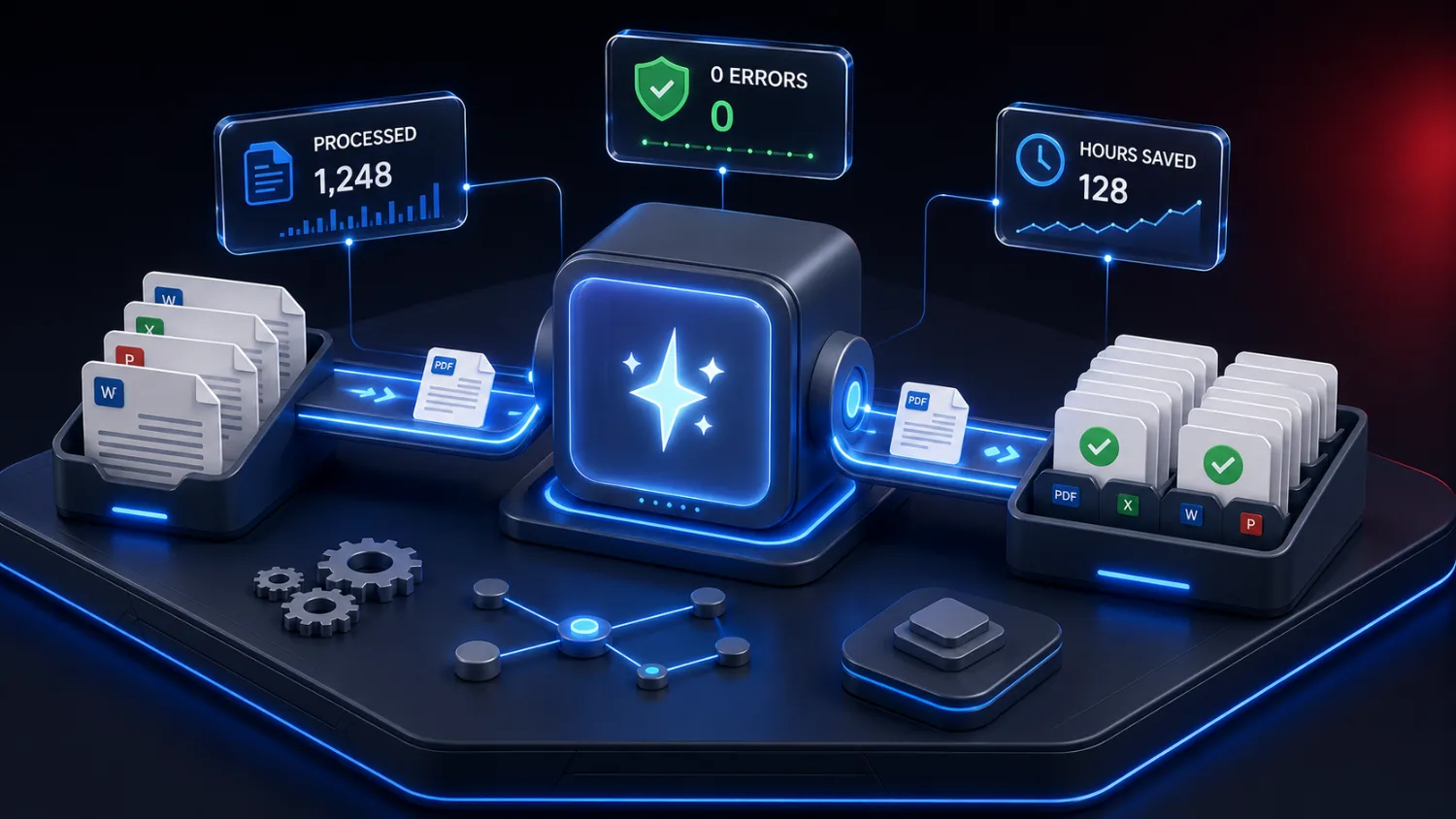
Business process automation for UAE companies.
Most teams lose hours every week to work that a computer should be doing: copying numbers between systems, retyping invoices, chasing the same updates. We automate those steps and wire the automation into the tools you already use, so the work just happens.
Tasks we commonly automate
- Invoice and document processing, read and filed instead of typed twice
- Order and data sync between your website, ERP and accounting
- Payment and statement reconciliation
- Recurring reports and alerts, sent without anyone remembering to
- Approvals and multi step workflows that currently rely on chasing
The tools we actually build on.
There is no single right automation platform, and anyone who only ever recommends one is recommending the one they know. We pick per job, based on where your data already lives and who has to maintain it afterwards.
Workflow and orchestration
- n8n for most of the serious work. It can run on your own server, which matters when the data is financial or customer records, and it does not charge per task, so a high volume workflow does not get more expensive every month.
- Make and Zapier when the job is connecting two cloud apps quickly and the volume is modest. Faster to stand up, and easy for your own team to adjust later.
- Microsoft Power Automate when you are already on Microsoft 365, because approvals, SharePoint and Teams are where the work already happens and adding another tool would be friction for no gain.
- Custom code such as Python or an Odoo module, for when the logic is genuinely specific to your business. A workflow tool is the wrong place to hide complicated rules that only you have.
The AI layer
- OpenAI and Claude APIs for reading messy documents, classifying them and drafting text. These are the parts where input varies and a fixed rule would break.
- Odoo document digitisation where you are already on Odoo and the built in OCR is enough. It is usually cheaper than adding a separate service for the same job.
What connects all of this is the integration work: REST APIs, webhooks and scheduled jobs into Odoo, your payment gateway, WooCommerce, your bank feed and WhatsApp. That plumbing is the part that decides whether an automation survives contact with a real business.
Three automations we get asked for most.
Abstract automation talk is easy. These are concrete, and they are the ones that pay for themselves fastest in a UAE business.
1. Payment settlement reconciliation
Your gateway pays out in batches, and the payout never matches the invoices one to one because fees, refunds and chargebacks are netted off. Somebody usually reconciles that by hand in a spreadsheet.
Instead, the settlement file from Network International, N-Genius, Telr, PayTabs or Magnati is pulled automatically, matched against the invoices and payments in Odoo, and posted. Only the exceptions reach a person, with the reason attached. The daily job goes from an hour of matching to a short look at the handful that did not match.
2. Supplier invoice intake
Bills arrive as PDFs by email, in every layout their sender felt like using, and get retyped into the accounting system.
Instead, the mailbox is watched, the document is read by AI, and a draft bill appears in Odoo with the supplier, TRN, line items, VAT and due date already filled in. Your accounts person approves or corrects it rather than typing it. The correction step stays deliberately, because a supplier bill posting itself unreviewed is how you end up paying a duplicate.
3. Order and status sync
An order lands on WooCommerce, gets re-keyed into Odoo, stock is adjusted separately, and the customer emails to ask where it is.
Instead, the order flows straight into Odoo, stock moves with it, and the customer gets a WhatsApp message when the status changes. Nobody re-keys anything and the where-is-my-order emails largely stop.
Where AI helps, and where a plain rule is better.
A lot of what gets sold as AI automation is a rule with better marketing. We would rather tell you which is which, because the wrong choice costs you money in both directions.
AI earns its place when the input varies
Reading a hundred supplier invoices that all look different. Deciding which inbox message is an order, a complaint or a question. Drafting a reply that somebody then edits. Pulling the delivery address out of a paragraph a customer typed badly. A fixed rule cannot survive that kind of variation, and writing one that tries usually produces a system nobody can maintain.
A plain rule wins when the answer must be exact
Calculating VAT. Totalling a statement. Deciding whether an invoice is overdue. Matching a reference number. These have one correct answer, a rule gets it right every time and costs nothing to run, and putting a language model in the middle adds expense and a small chance of confident nonsense. We do not do that.
Where a person stays
Anything that spends money, commits to a customer, or is hard to reverse keeps a human approval step. The automation does the gathering, the checking and the drafting. The decision stays with your team, which is also what keeps the system trusted enough to actually get used.
Automate the mechanical work, keep people on the judgement calls.
We are not trying to replace your team with a black box. We map the workflow, automate the mechanical steps, and put a person exactly where their judgement matters, approving the calls that carry risk. You keep control and get the time back.
The result is fewer copy and paste mistakes, faster turnaround, and hours returned to your people each week for the work that actually needs a human.
How an automation project runs.
- We map the workflowWe follow the real steps, including the messy exceptions, because that is where automation usually breaks if you skip it.
- We find the winsWe separate the tasks worth automating from the ones better left to a person, so effort goes where it actually pays off.
- We build and connectThe automation is wired into the systems you already use, so data moves between them instead of being re keyed.
- We place the checksA person approves the calls that carry risk, so you get the speed of automation without handing over judgement.
- We measureWe track time saved and errors cut, so the value is something you can see rather than take on faith.
Manual, rules based, or AI assisted?
Not everything should be automated the same way. Here is how the options compare.
| What matters | Manual | Rules based automation | AI assisted |
|---|---|---|---|
| Speed | Slow | Fast for fixed steps | Fast, handles variation |
| Handles messy input | Yes, but slowly | Poorly | Well, with a review step |
| Setup cost | None | Low to moderate | Moderate |
| Error rate | Human error | Very low on clean input | Low, with human checks |
| Oversight | Full | Little needed | A person approves the calls that matter |
| Best for | Rare, one off tasks | High volume, consistent work | High volume with exceptions |
What we automate, and how
- Document processing. Extracting structured data from invoices, delivery notes and purchase orders so they do not have to be re-keyed, with a person approving anything the system is unsure about.
- System-to-system sync. Moving orders, stock and customer records between your website, ERP and accounting on a schedule or on an event, instead of by export and import.
- Reconciliation. Matching payments, settlements and bank lines against the ledger, and surfacing only the exceptions that need a human decision.
- Reporting and alerts. Recurring reports assembled and delivered automatically, with thresholds that raise an alert when a number moves outside its normal range.
- Approvals. Multi-step approval routing with a full audit trail of who approved what and when.
- Where the human stays. Judgement calls, exceptions and anything with a compliance consequence keep a person in the loop by design.
Questions about automation.
What kind of tasks can you automate?
Repetitive, rule based work: invoice and document processing, syncing orders and data between systems, reconciliation, recurring reports and alerts, and multi step approvals.
Do you replace our staff with AI?
No. We automate the mechanical steps and keep a person in the loop for the decisions that need judgement. Your team spends less time on copy and paste and more on real work.
Does the automation work with our existing systems?
Yes. We wire automation into the tools you already use, such as your website, ERP, accounting and payments, so data moves instead of being re keyed.
Where does AI actually fit in?
AI helps read documents, sort and draft, and flag things that look off. A person still approves the calls that matter, so you get the speed without losing control.
How do we know a task is worth automating?
Tell us the task and roughly how often it runs. We will tell you honestly whether automating it pays off or whether it is better left alone.
Which automation platform do you use?
It depends on the job. We use n8n for most serious work, because it can run on your own server and does not charge per task, which matters at volume. Make or Zapier when the job is connecting two cloud apps quickly. Microsoft Power Automate when you are already on Microsoft 365. And custom Python or an Odoo module when the logic is genuinely specific to your business.
Can the automation run on our own server?
Yes, and we often recommend it. n8n can be self-hosted, which means financial records and customer data stay on infrastructure you control rather than passing through a third party platform. It also removes per-task pricing, so a workflow that runs thousands of times a month does not get more expensive as you grow.
Do you use AI for everything?
No, and we would rather say so. AI earns its place where the input varies, such as reading supplier invoices that all look different or sorting inbound messages. Where the answer has to be exact, like calculating VAT or matching a reference number, a plain rule is cheaper, faster and cannot be confidently wrong. We use rules there.
Describe the repetitive task and we will tell you if it is worth automating.
Sometimes the honest answer is that it is not, and we will say so rather than sell you a project.
What is eating your team’s time?
Describe the repetitive task and we will tell you if it is worth automating. Same-day reply.
Book a consultation